 Purchasing
 Inventories and waste
 Analytics and performance
 Recipe cards
 Production management
 HACCP
HACCP Mobile app
 Invoices and prices
 AI assistant
 Multi-location groups
 Casual dining
 Fast food
 Hotels
 Food courts
 Bakeries
Restaurant franchises
Food cost: 5 mistakes that hurt your restaurants' profitability
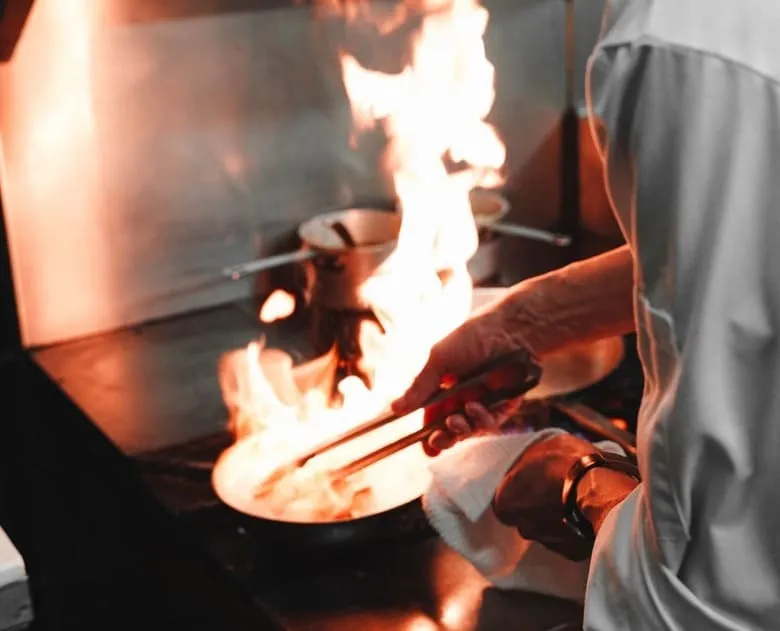
With inflation this high, poor inventory management can lead to considerable financial losses. Only the best-organized restaurateurs, with a precise view of their stock, manage to keep their food cost under control.
Unfortunately, many operators still neglect in-depth analysis of their stock, which leads to an accumulation of mistakes that can quickly add up to thousands of euros.
Where do you start? Which levers should you pull to maintain the profitability of your locations?
Here are 5 common inventory management mistakes to avoid at all costs in your restaurants:
⛔️ Not forecasting your raw material needs
In the face of inflation, restaurateurs must anticipate their raw material needs to avoid two common problems: overstocking and stockouts.
Over-ordering, the leading cause of waste
Storing raw materials for too long inevitably increases your waste rate and eats into your margin, especially for expensive raw materials with a short use-by date. Overstocking also ties up storage space, especially fridges and cold rooms, and adds to your energy costs. It also encourages theft, which is harder to detect when you are overstocked.
Avoiding stockouts
Stockouts are another major problem for restaurateurs. If you run out of raw materials, you won’t be able to prepare certain dishes, which can frustrate your customers.
Reducing costs and increasing profits
Purchasing has become a real headache, especially when you have to supply several restaurants. To place the right order, you must forecast your stock based on sales forecasts and stock levels.
Yokitup is developing a solution to forecast your needs accurately and ensure optimal purchasing management. Based on sales forecasts, quantities in stock and each ingredient’s use-by date, our smart ordering module tells you how much to buy and when.

⛔️ Not checking goods on delivery
Price fluctuations lead to more and more errors, which can end up being very costly. It is therefore crucial to check your goods carefully on delivery, especially expensive raw materials such as meat or fish.
Avoiding extra costs
- Did you receive the quantity and quality you ordered, at the agreed price?
- Was any of the ordered products substituted or removed? If so, where is the corresponding credit?
Setting up a quality control protocol
✅ With Yokitup, you can enter the quantities of the products received in the software. If there is an anomaly or an incomplete delivery, you can automatically generate a refund request. We also recommend keeping a record of the issue by attaching a photo directly in the app.
This way, you save precious time and will never again pay for missing or damaged products.
⛔️ Not relying on menu engineering
Analyzing ingredient costs
A sudden spike in the price of certain ingredients can cause a dish’s profitability to vary from day to day.
Menu engineering is an excellent way to spot the most profitable dishes on your menu. It also lets you react quickly when a dish falls below your target profitability.
Monitoring dish popularity
✅ Once you have identified them, all you need to do is focus your efforts on promoting the most popular and most profitable dishes.
This method lets you make reliable, data-driven decisions to adjust your menu. If a popular dish requires a new ingredient whose price has skyrocketed or is likely to rise, you can quickly find a higher-margin substitute.
The goal is also to understand where you are losing margin, spot underperforming dishes and remove them.
Calculate your restaurant’s profitability for free
Yokitup has developed the first 100% free tool for quick-service and full-service restaurants, bakeries and hospitality professionals. By signing up via this link: Free software, restaurant professionals can efficiently manage their recipe cards, carry out their inventory counts, analyze the cost price of each item and evaluate the profitability of their dishes to optimize their food cost.

⛔️ Not identifying your losses accurately
Using strict tracking methods
Where exactly do they occur? What actions can you take to minimize them? The first step to reducing your losses is to identify their causes accurately.
These losses can come from different sources, including:
- Food waste: over-ordering, expired or poorly stored food.
- Theft: food, drinks or supplies.
- Raw materials consumed by employees.
- Complimentary items.
- Breakage: broken bottles, damaged products unfit for consumption.
- Not following recipe cards: poorly prepared dishes, inefficient production.
To identify the cause of a loss accurately, start by listing your losses and sorting them into categories to find their origin, focusing on the most expensive and most affected products.
Saving money in the long run
✅ Once you have identified the sources of your losses, you can take steps to minimize them.
Carry out a full inventory count once a month to keep effective control over your raw materials. For greater accuracy, you can also do a partial count every two weeks on problem products or the most expensive ones.
⛔️ Not analyzing your ratios
Raw material costs
Centralizing data gives complete visibility on your restaurants’ financial performance. It is essential for decision-makers and restaurant managers to steer the performance of their network effectively.
Having a precise view of your purchasing and losses has become essential to protect your margins. A tool that lets you clearly visualize your ratios will help you make the best decisions and react quickly when something is wrong.
Gross margin and profitability
At Yokitup, we have designed a 100% customizable dashboard where all your data is available in real time. Restaurateurs can generate detailed reports on purchasing spend, sales trends and waste rates.
By analyzing the performance of each location, they can easily identify where savings can be made, optimize their food cost and improve the overall profitability of their restaurants.
Want to know more? Our team helps you set up the best inventory management strategy for your restaurants.